
What to Save From the School Year — Without Keeping Everything
The end of the school year has a way of coming home all at once.
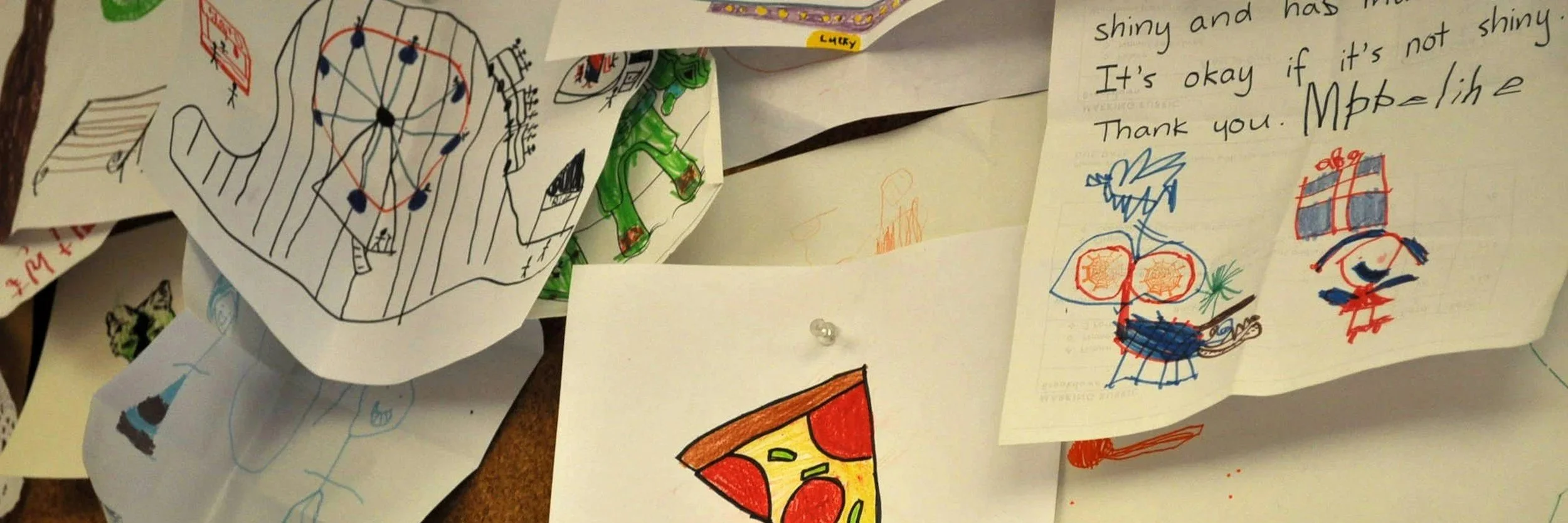
Backpacks get cleaned out. Folders are emptied. Artwork, worksheets, awards, programs, class photos, school projects, and little notes suddenly land on the kitchen counter, the dining room table, or in a pile by the door.
Some of it feels important. Some of it feels like clutter. And a lot of it falls somewhere in between.
If you have ever looked at a stack of school papers and thought, I know I can’t keep all of this, but I don’t know what to throw away, you are not alone.
The good news is that you do not have to save everything in order to remember the year well.
Why It Is So Hard to Decide What to Keep
School papers can carry a surprising amount of emotion.
A spelling test might show progress. A drawing might remind you of what your child loved that year. A handmade card might feel too sweet to toss. Even the messy, ordinary papers can feel like little proof of who they were at that age.
That is why it can feel hard to let things go.
But when everything gets saved, those meaningful pieces can get buried. Instead of becoming memories you can enjoy, they often end up tucked into bins, folders, drawers, or boxes that no one looks through again.
The goal is not to throw away the year.
The goal is to choose the pieces that tell the story best.
What Is Worth Saving From the School Year
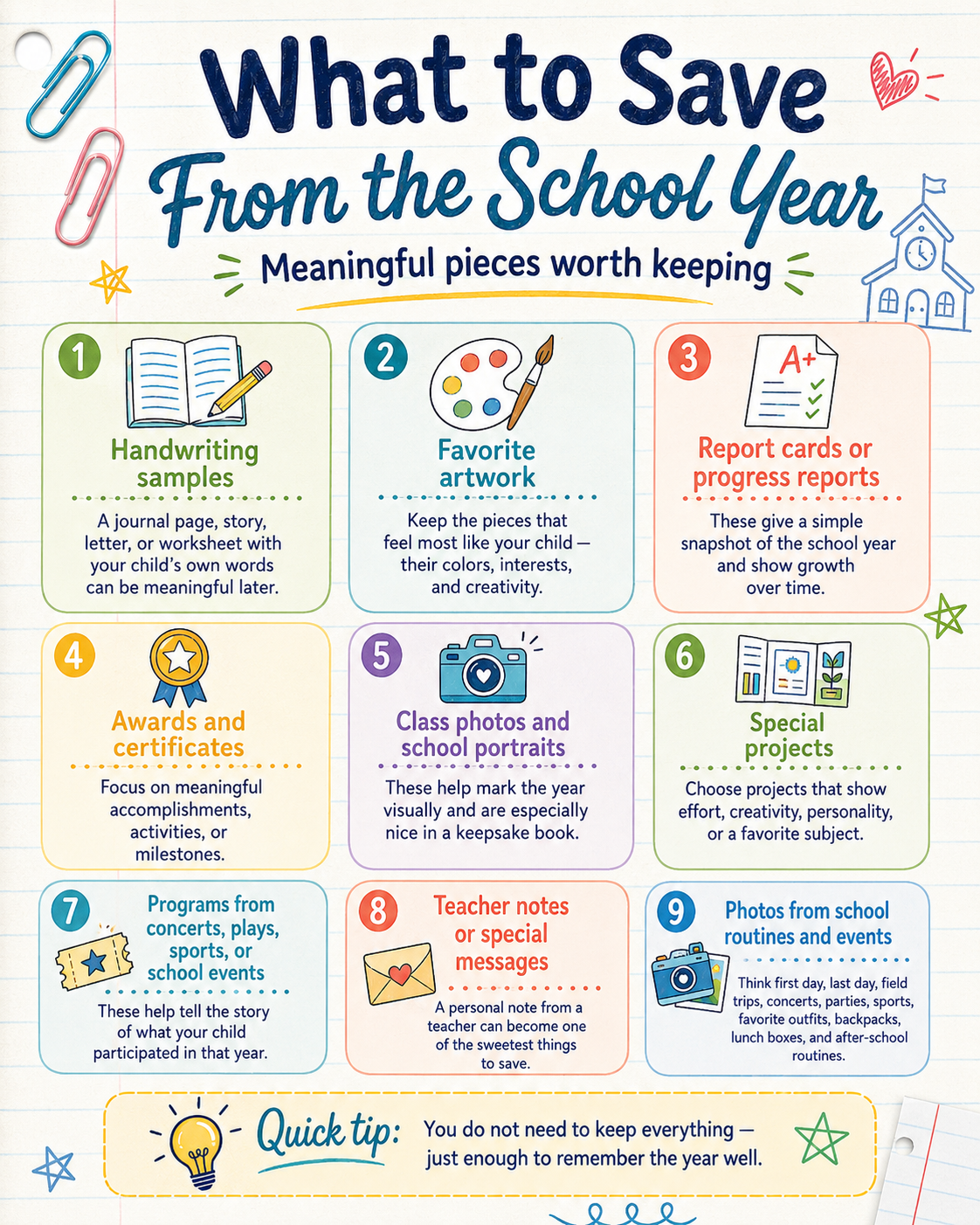
When you are sorting through school papers, it helps to look for things that show personality, growth, milestones, or a specific memory.
Here are some things that are often worth saving:
You do not need a huge amount from each category. A few thoughtful pieces are usually enough.
How I Saved My Own Children’s School Memories
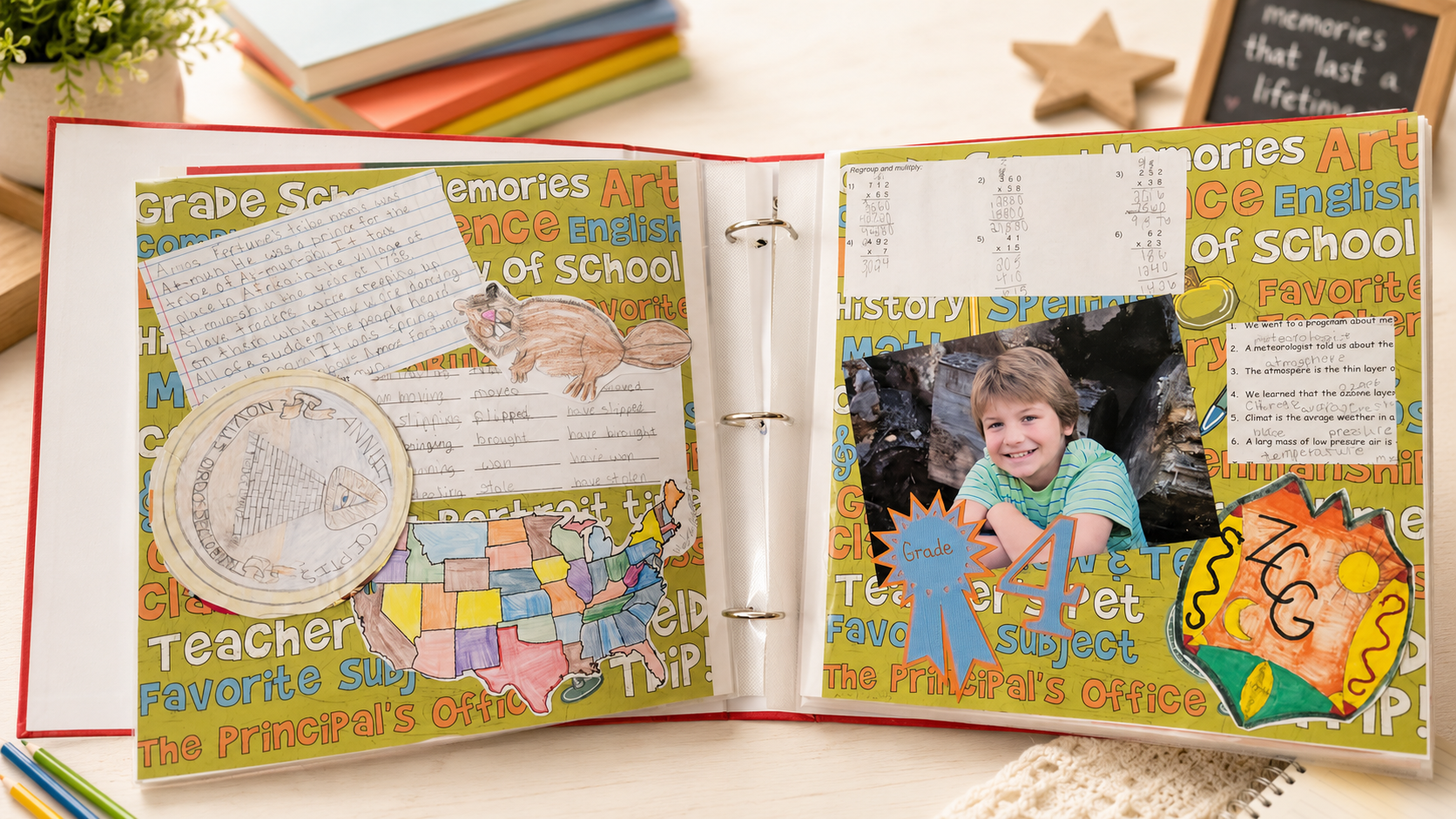
When my own children were in school, I kept a box for each school year and added their papers, artwork, and projects to it as the year went along.
At the end of the school year, I would sort through everything by child. With four kids, there was always a lot to go through, but having it all in one place made the process much easier.
I usually kept examples from each subject, along with special papers, artwork, awards, or anything that felt meaningful from that year. If there was a project I wanted to remember but it was too bulky or too large to fit in a book, I took a photo of it instead.
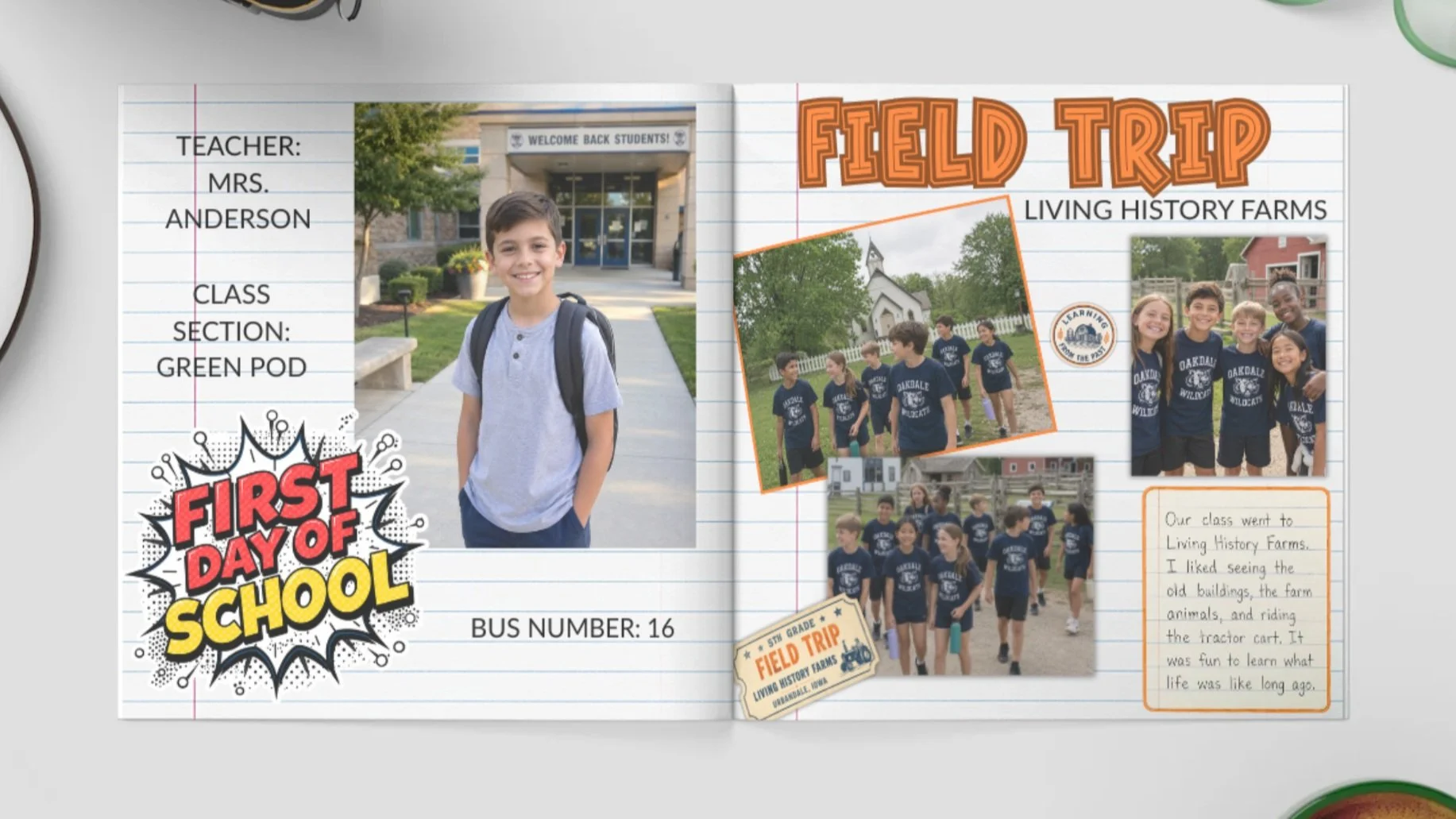
Then I scrapbooked the pieces I had chosen into a simple two-page spread and included that year’s school photo.
By the time each child graduated, they had a book filled with little snapshots from every school year — handwriting samples, favorite projects, school photos, and pieces that showed who they were at each age.
Those books are so fun to look back on now.
That same idea is what inspired my End of School Year Mini Book. The mini book gives each school year more room to breathe, with up to 20 pages for photos, artwork, special papers, school memories, and little details from the year.
It is still not about saving everything.
It is about choosing the pieces that tell the story best and turning them into something your family can enjoy looking back on.
What You Can Usually Let Go
Some papers come home because they were part of everyday learning, but that does not mean they all need to be kept.
You can usually let go of:
Duplicates
Generic worksheets
Repetitive practice pages
Damaged papers
Loose scraps that do not have much meaning
Papers that do not show personality, growth, or a specific memory
Items your child does not care about and you do not feel connected to
This does not mean those things were unimportant. They served their purpose during the school year. They just may not need to become part of your long-term memory collection.
A helpful question to ask is:
Would this help me remember who my child was during this school year?
If the answer is no, it is probably okay to let it go.
Photograph Before You Toss
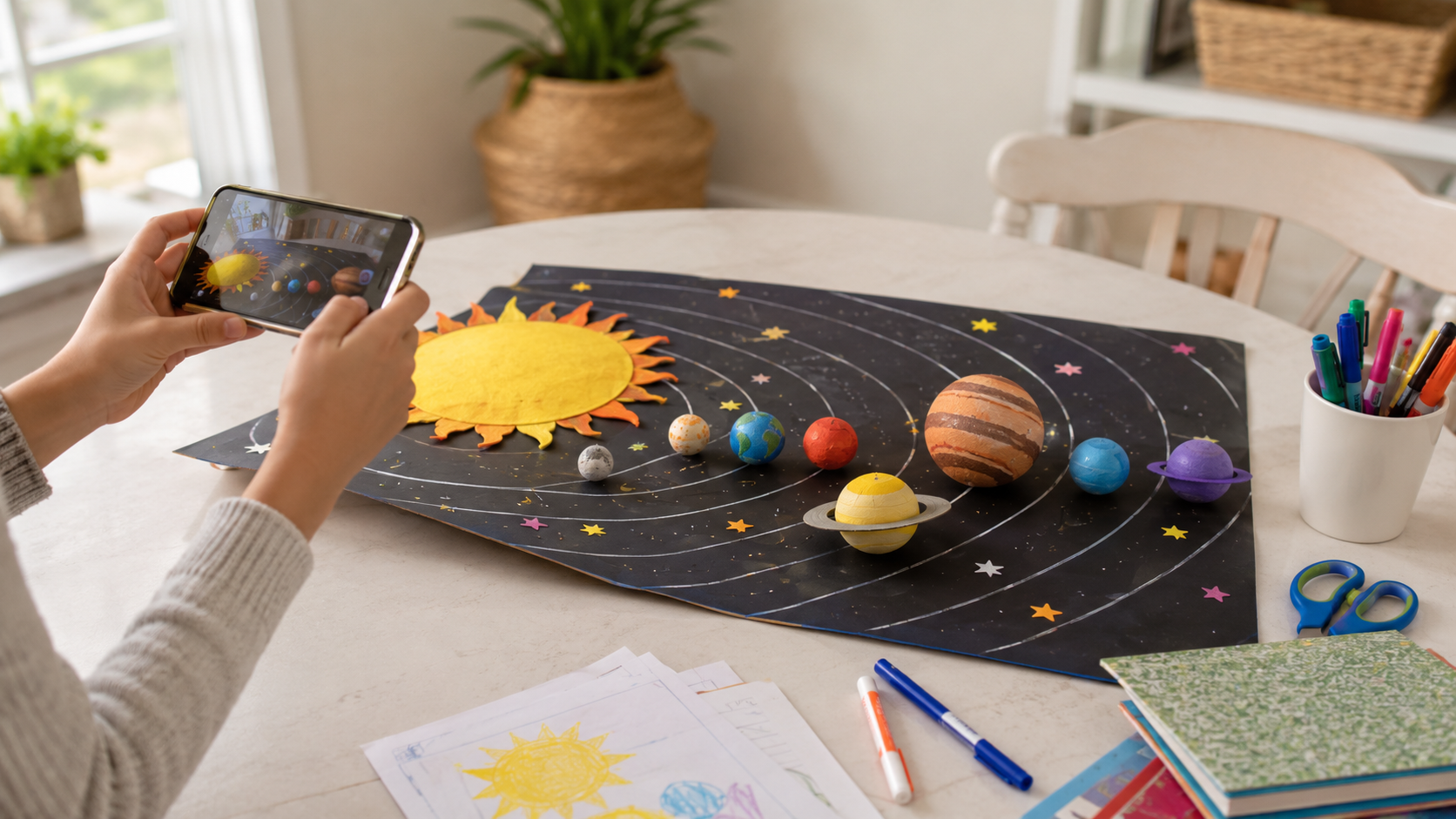
Some school memories are worth keeping, but not necessarily in physical form.
Bulky art projects, science fair boards, posters, dioramas, large paintings, and fragile crafts can take up a lot of space. Before you decide whether to keep the actual item, take a clear photo of it.
You can photograph:
Your child holding the project
The project by itself near natural light
Close-up details, like handwriting or artwork
A few pieces grouped together before you sort them
This gives you the option to preserve the memory without keeping the object forever.
For many families, a photo is enough.
Create One Small School-Year Collection
Once you have narrowed things down, think about creating one small collection for the year.
This does not have to be complicated. It could be a folder, a small box, a digital album, a scrapbook spread, or a mini book.
The idea is the same: choose the pieces that tell the story best, and let the rest go.
A mini book gives you more space than a scrapbook spread, but the purpose is still the same: to preserve the feeling of the year without keeping every paper, worksheet, or project.
A school-year mini book can include favorite photos, artwork, writing samples, awards, special memories, school events, and the little details that made the year feel like that year.
It does not need to include everything.
It just needs to capture the feeling of the school year.
A Simple Way to Sort the Pile
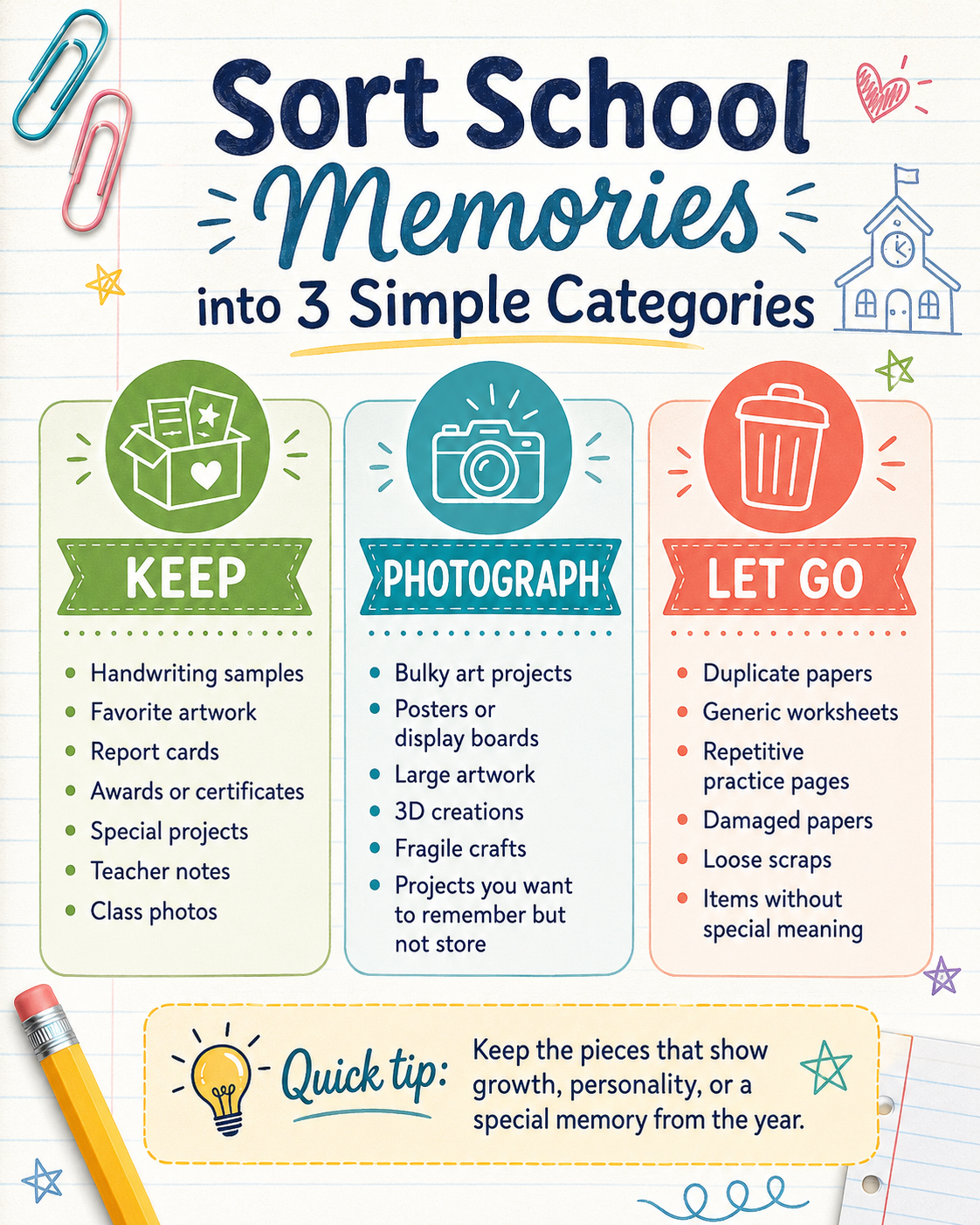
If you are staring at a stack of school papers right now, start with three piles:
Keep
The pieces that show growth, personality, milestones, or special memories.
Photograph
Bulky, oversized, or fragile items you want to remember but do not necessarily want to store.
Let go
Duplicates, practice pages, generic worksheets, or anything that does not feel meaningful.
Once you have sorted everything, look at the keep pile again. You may find that you can narrow it down even more.
Often, the best memory collection is not the biggest one. It is the one that is easiest to enjoy.
You Do Not Have to Save Everything
Your child’s school year mattered.
The projects, the papers, the photos, the milestones, the ordinary routines — they all helped make up this season of life.
But you do not have to save every paper to remember the year well.
A thoughtful handful of photos, artwork, notes, and school memories can tell the story beautifully.
And sometimes, letting go of the extra papers makes it easier to see the memories that matter most.
Want help turning this year’s school memories into something you can actually enjoy?
My End of School Year Mini Book service helps you gather the best photos, artwork, school papers, and little memories into one meaningful keepsake
without needing to save every worksheet, every project, or every paper that came home.