
What to Do With Old Family Photos Before the Stories Are Lost
I have quite a few old family photographs, and some of them I know exactly who the people are, where the photo was taken, and even some of the story behind it. Others I know a little bit about, and then there are some where I honestly have no idea who I am looking at.
That is the part that really bothers me, because the photograph may still be here, but the story that went with it may already be gone.
Names get forgotten, places become harder to identify, dates get mixed up, and sometimes the one person who could have answered all of those questions is no longer here to ask. That is why I think preserving old family photos is about more than simply storing them safely. It is also about saving as much of the information and story connected to them as we can.
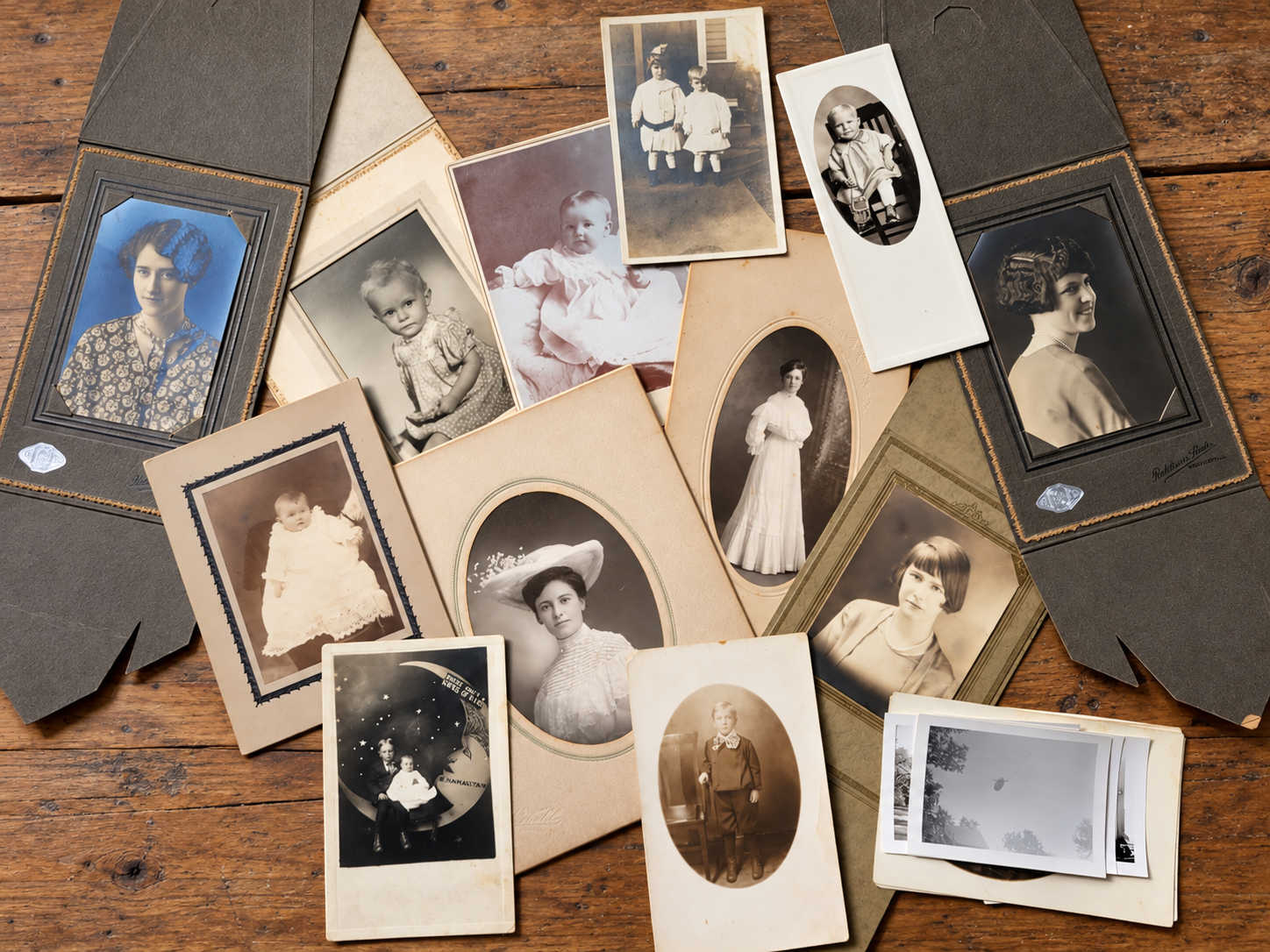
Some old family photos come to us with no names or stories attached, which is exactly why preserving information matters.
Why Old Family Photos Can Feel So Hard to Deal With
If you have boxes, albums, envelopes, negatives, or loose stacks of old photographs, you probably already know how quickly a project like this can start to feel overwhelming.
You may not know who some of the people are, what year the picture was taken, whether two groups of photographs belong together, or even where to begin. Then you start wondering whether you should scan everything, how you should organize it, what you should keep, and what you are eventually going to do with all of it.
When there are hundreds or even thousands of photographs, it can be very easy to decide that you will deal with it later.
The problem is that while the photographs themselves may wait, the information connected to them may not.
Start With What You Know
I do not think you need to create the perfect organization system before you begin. In fact, sometimes the easiest way to make progress is simply to start grouping together the things you already recognize.
That might mean separating photographs by family line, person, household, event, time period, location, or album. If an old album was already put together years ago, I would keep those photographs together until you understand more about what is in it, rather than immediately taking everything apart.
There will probably be photographs that do not fit anywhere yet, and that is completely fine. The goal is not to solve every mystery right away. It is simply to create enough order that, as you learn more, you have somewhere to put that information.
Photo idea: Use one of your older family photos here, especially one where you know some of the people but not everyone pictured.
Capture Names, Places, and Stories as You Go
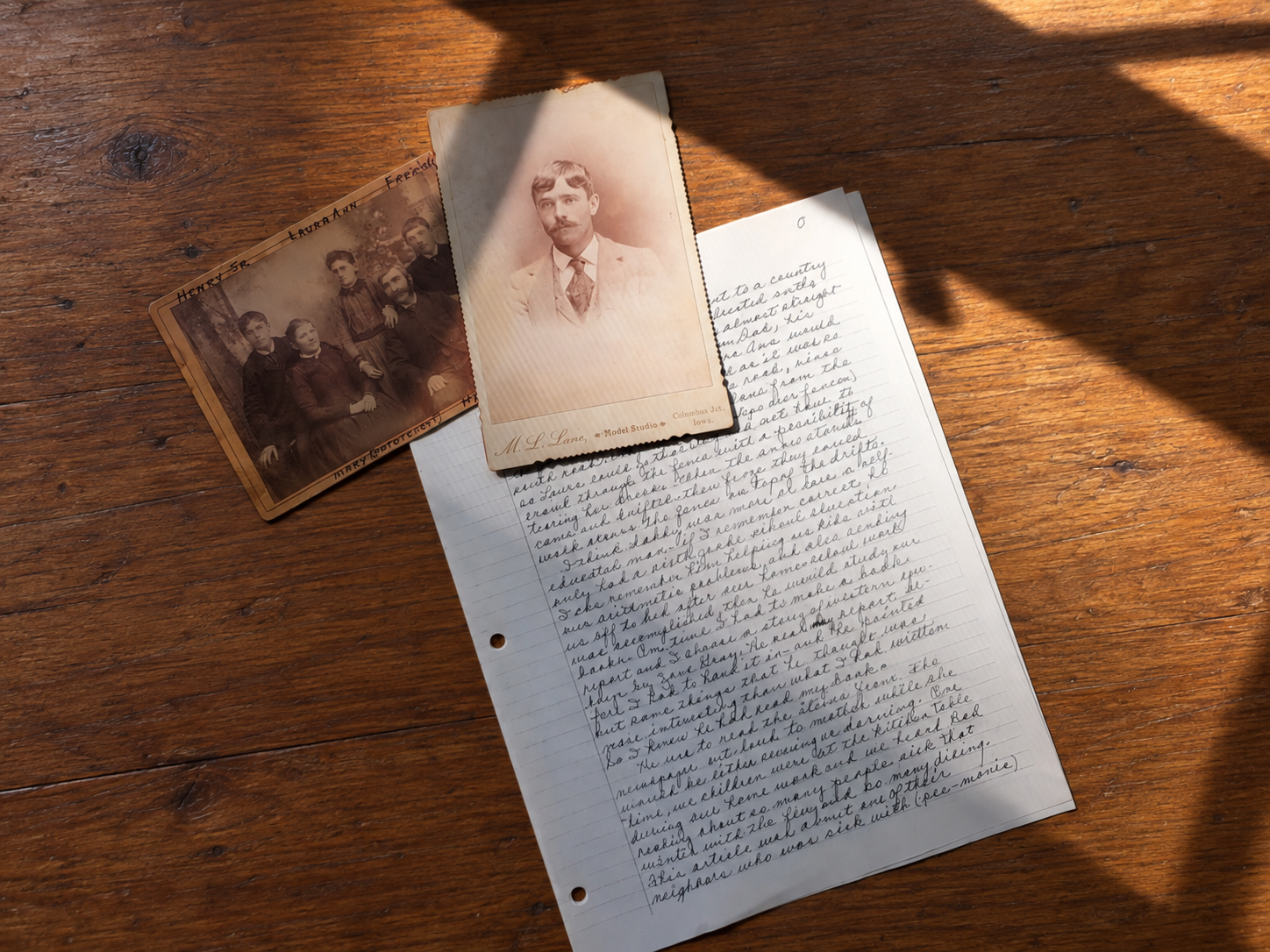
When a photograph is paired with a written memory, it becomes much easier for the next generation to understand its story.
This is probably one of the most important parts of the process, especially if you still have parents, grandparents, aunts, uncles, or other relatives who may recognize the people or places in the photographs.
If someone knows who is in the picture, write it down. If they remember where it was taken, when it was taken, or why everyone was together, write that down too. Even if the memory is not exact, something like “probably taken in the early 1950s” or “we think this may have been at Aunt Mary's house” is much more helpful than having no information at all.
You also do not need to limit yourself to names and dates. Sometimes the stories that come up while looking at the photographs are the most important part.
Maybe someone remembers that this was the first house the family owned, that the car in the photo belonged to a certain relative, that everyone was gathered for a birthday, or that something funny happened that day. Those are the details that turn an old photograph into part of a family story.
What We Are Doing With Old Negatives
My folks and I have actually been doing something similar while going through old negatives, and that has reminded me just how important it is to write things down as you discover them.
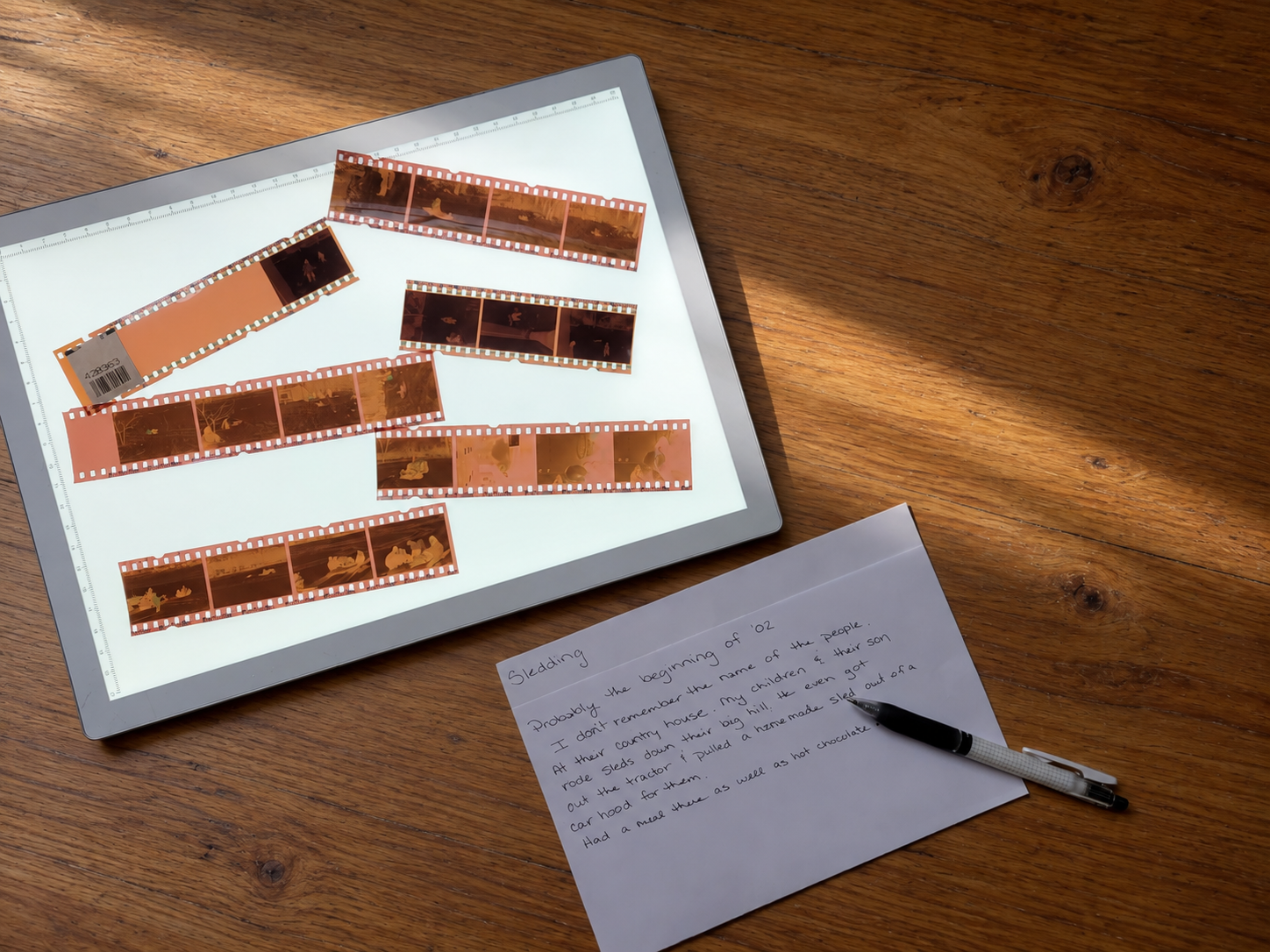
As we sort through old negatives, I have been writing down names, places, and memories right away so the information stays with them.
We have a mixture of newer and older negatives, and they are not in any kind of order. They are simply random strips, so we have been viewing them one at a time and trying to figure out what we can.
As we look at each strip, I have been writing the information on an envelope, index card, or another piece of paper that I can fold around the negative. I write down who is in the images if we know, where they were taken if we recognize the location, approximately when they were taken, and any stories that come up while we are looking at them.
Then I fold the paper around the negative and place it into my sorting box.
What I like about doing it this way is that the information stays right with the negative, but I can also add to it later. If we come across another negative and realize, “Oh, this was at the same park as that other one,” I can go back to the first packet and add whatever else we remember.
Sometimes that may be another name, another part of the story, or simply a note that the negatives belong together.
If we eventually decide that particular event is something we want to scan, make prints from, or include in a family project, we will already have a lot of the information gathered and the related negatives grouped together.
And when we have absolutely no idea what we are looking at, I have simply been writing “unknown at this time” and keeping those negatives together. That does not mean they will always remain unknown. As we continue going through the collection, something else may jog our memory, or we may come across another negative that clearly belongs with it.
Even being able to say, “These two groups belong together, but we do not know what the event was,” is still useful information.
Photo idea: If you decide to photograph your sorting box later, this would be a perfect place for it. You could also photograph one folded packet with the negative and handwritten notes together.
Preserve Before You Perfect
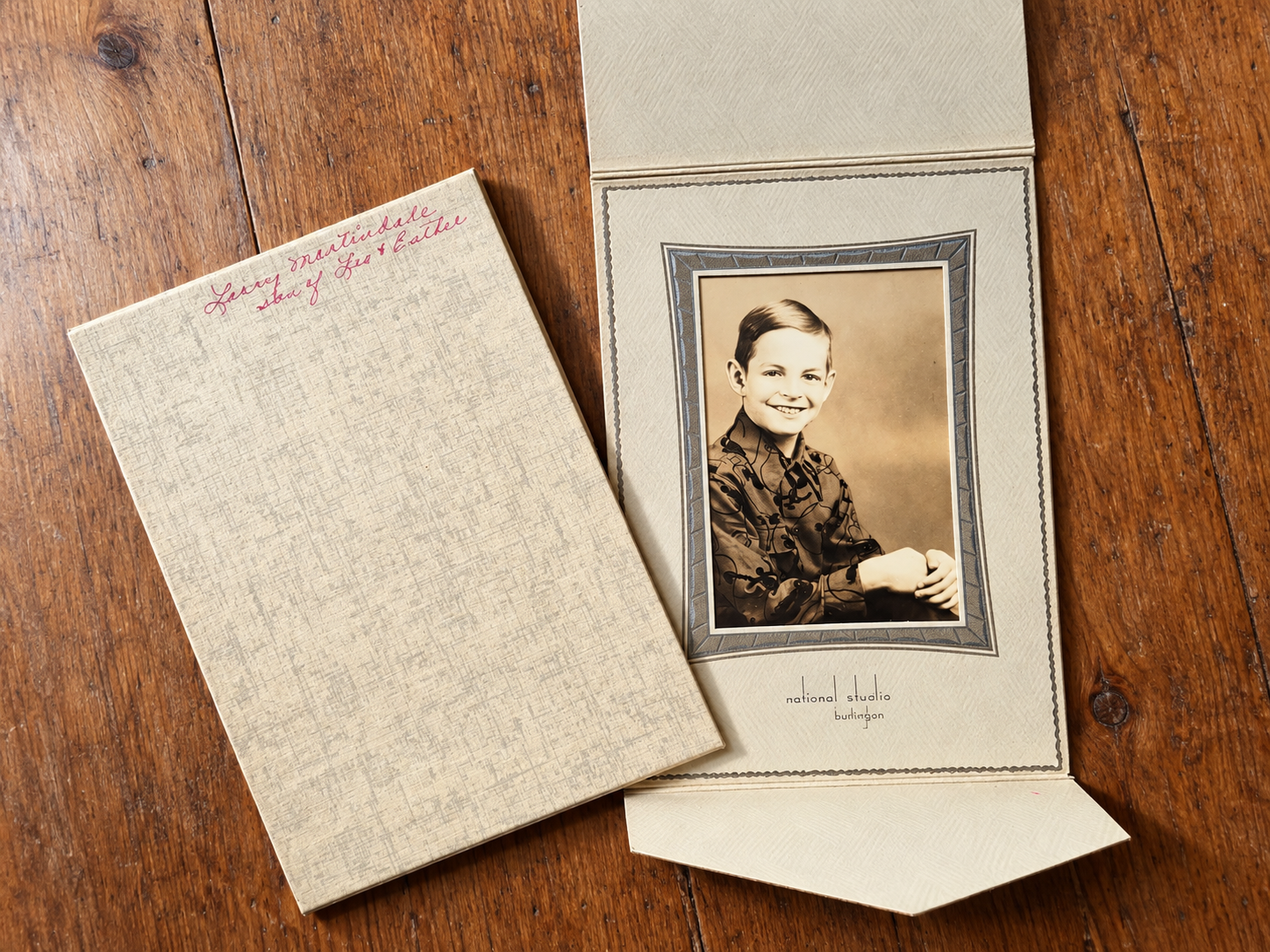
Even a small handwritten note can preserve an important piece of a family photo’s story.
One of the easiest traps with old family photographs is thinking that you have to know everything before you can do anything with them.
You do not.
You may not know every name, every date, or every location, and some photographs may remain a mystery no matter how much time you spend on them. That does not mean the project has failed.
What matters is preserving what you do know and keeping the photos and information together in a way that makes sense.
You can scan an important photograph even if you do not know the exact date. You can write down the names you recognize even if one person is still unknown. You can group photographs that obviously belong together even if you cannot identify the event yet.
The important thing is not waiting so long for perfect answers that the information you do have disappears too.
What Old Family Photos Can Become
Once old photographs and negatives begin to make a little more sense, you have many more options for what to do with them.
They may become part of an organized family archive, a scanned digital collection, a genealogy project, a family history book, a legacy photo book, a slideshow, or a shared family folder.
Some families may want to preserve an entire collection, while others may decide to focus on the photographs that tell the most important stories. You might create something around one person, one branch of the family, one generation, or one particular period of time.
There really is not one right way to do it.
The important part is that the photographs become something your family can understand rather than simply a box of images that no one knows anything about.
You Do Not Have to Do Everything at Once
If you have a large collection, you do not have to sit down and organize the whole thing in one weekend. You may start with one album, one box, one envelope of negatives, or simply the photographs connected to one side of the family, and then build from there as you have time.
As you go, write down what you know, keep related photographs or negatives together, and make note of the questions you still have. If there are especially important photographs, those may be the first ones you choose to scan or make copies of.
I have photographs in my own collection where I know exactly who I am looking at and what was happening, and I have others where I may never know.
That is exactly why I think this matters.
The photographs themselves may survive for a very long time, but the names, places, relationships, and stories connected to them only survive if someone takes the time to save them.
