

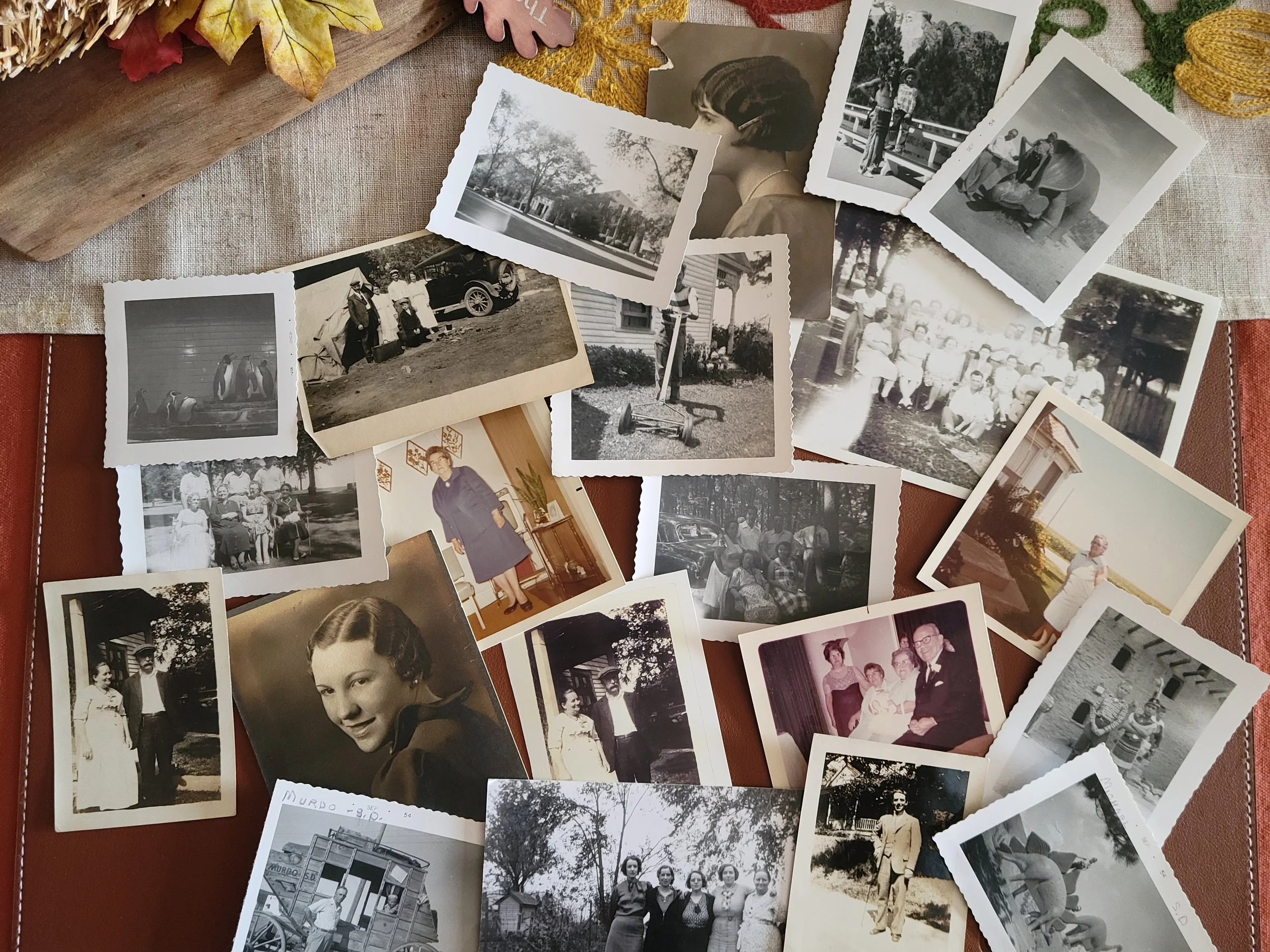
Have you ever looked through a box of old family photographs and wondered who the people were, where the pictures were taken, or what was happening that day?
Maybe you recognize your grandmother standing in front of a house, but you have no idea whose house it was. Or you find a photograph of several relatives gathered around a table, and you wonder what brought everyone together.
The photographs are still there, but some of the stories behind them may already be missing.
Often, the people who can answer those questions are our parents, grandparents, aunts, uncles, or other family members who remember the people and places in those pictures.
Taking a little time to ask questions while those memories are still available can make a difference in what future generations know about their family.
Why the Stories Behind Family Photographs Matter
An old photograph can tell us quite a bit on its own. We might recognize a familiar face, notice the clothing people wore, or see a house or car that helps us estimate when the picture was taken.
But there are things a photograph cannot tell us.
It cannot explain why everyone was gathered together, what made someone laugh just before the picture was taken, or why a particular place was important to the family.
Sometimes, one small detail changes the way we see a photograph.
A picture of an unfamiliar house becomes more meaningful when you learn it was the first home your grandparents owned. A photograph of a woman standing beside a car takes on new meaning when you discover she saved for years to buy it herself.
Those are the kinds of details that can disappear when nobody thinks to ask.
Fortunately, you don't need to conduct a formal family history interview to preserve them. Sometimes, all it takes is sitting down together with a few photographs and letting the conversation unfold..
Start With the Basic Questions
When you're looking through old family photographs with someone, begin with the simplest questions.
These are often the details that help identify a photograph and give it a place in your family's history.
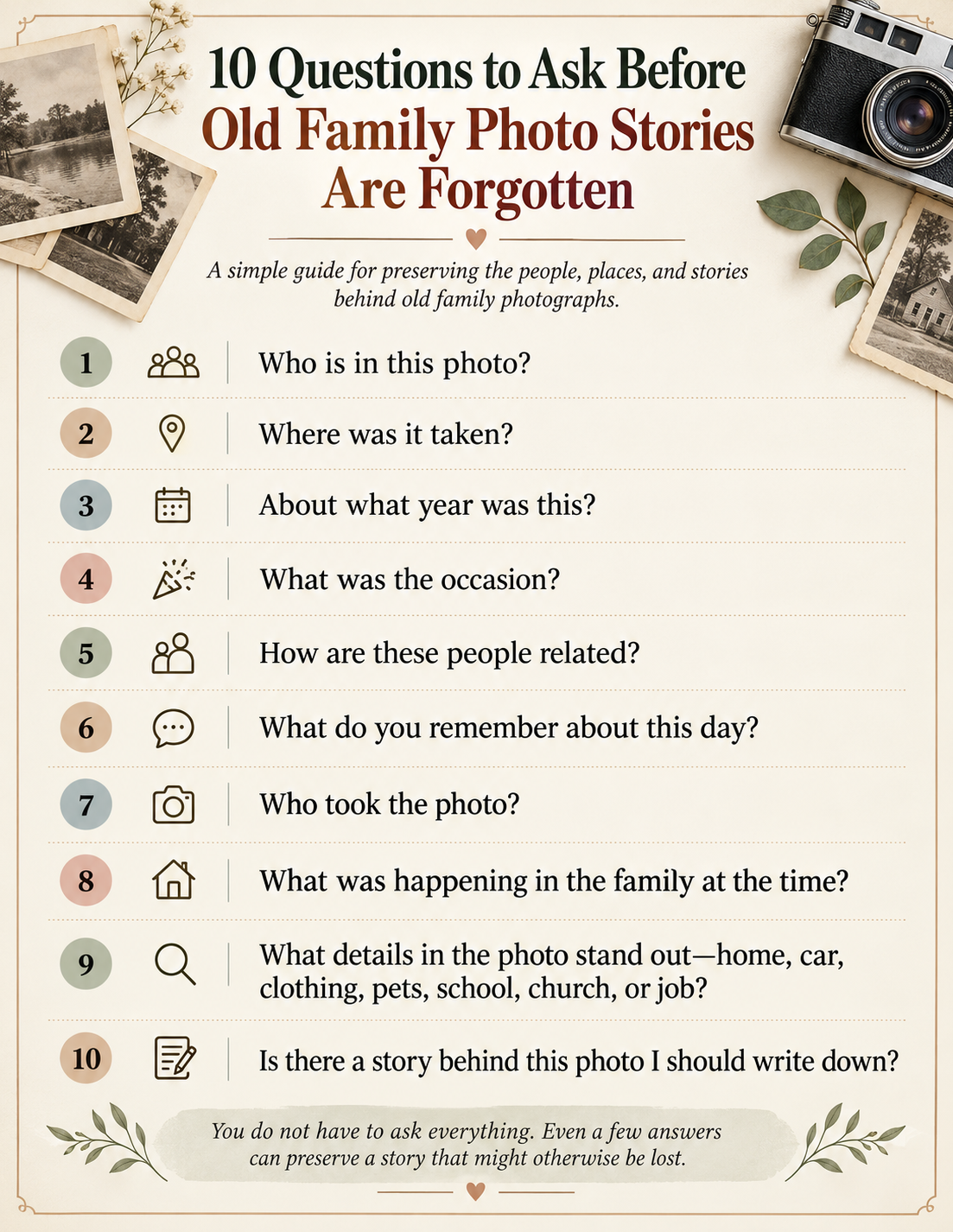
Who is in this photograph? Ask for full names if possible, including maiden names and nicknames.
Where was this picture taken? Was it at someone's home, on a family farm, at a school, or somewhere the family visited?
About what year was this? An approximate date is better than having no date at all.
What was the occasion? Was it a birthday, wedding, holiday, reunion, or just an ordinary day?
How are these people related? Knowing family relationships can help future generations understand who everyone was.
Even if your relative cannot remember every detail, the information they do remember can be valuable.
You might also discover that one photograph helps identify people or places in several others.
Ask Questions That Bring Out the Stories
Once you've identified the people and places, try asking questions that encourage your relative to share more than just names and dates.
Some of the most meaningful memories come from questions that don't have a simple one-word answer.
Here are a few to try:
What do you remember about this day?
Who usually took the family photographs?
What was happening in the family around this time?
Do you remember anything funny or unusual about this occasion?
What were these people like?
What did everyone enjoy doing together?
Was there a family tradition connected to this photograph?
What do you remember most about living or growing up during this time?
You may find that one question leads to a completely different story.
A photograph of a family picnic might bring back memories of a favorite swimming hole, a car that always broke down, or a grandmother who never arrived anywhere without bringing enough food for everyone.
Those unexpected stories are often worth preserving just as much as the original photograph.
Look Closely at the Little Details
Sometimes the most interesting questions come from things you notice in the background of a photograph.
Instead of focusing only on the people, take a closer look at the surroundings.
Homes and neighborhoods
Ask about the houses, streets, farms, or buildings in the picture. Who lived there? What was the neighborhood like? Is the building still standing?
Cars and transportation
An old car might bring back memories of family vacations, someone's first vehicle, or trips to visit relatives.
Clothing and uniforms
A military uniform, work clothes, school outfit, or special dress may reveal something about a person's life or an important occasion.
Pets and animals
The dog sitting beside your grandfather or the horses standing near a barn may have stories of their own.
Recipes and family gatherings
Photographs taken around kitchen tables or during holidays can lead to conversations about favorite family recipes, cooking traditions, and the people who prepared them.
Jobs, schools, and churches
Ask where family members worked, attended school, or went to church. These places often played an important role in their everyday lives.
Handwriting and notes
If a photograph has writing on the back, ask whether your relative recognizes the handwriting or knows what the message refers to.
It's easy to overlook these small details, but they can reveal a surprising amount about everyday family life.
And sometimes, the ordinary things are what future generations will find most interesting.
How to Record the Answers So They Aren't Forgotten Again
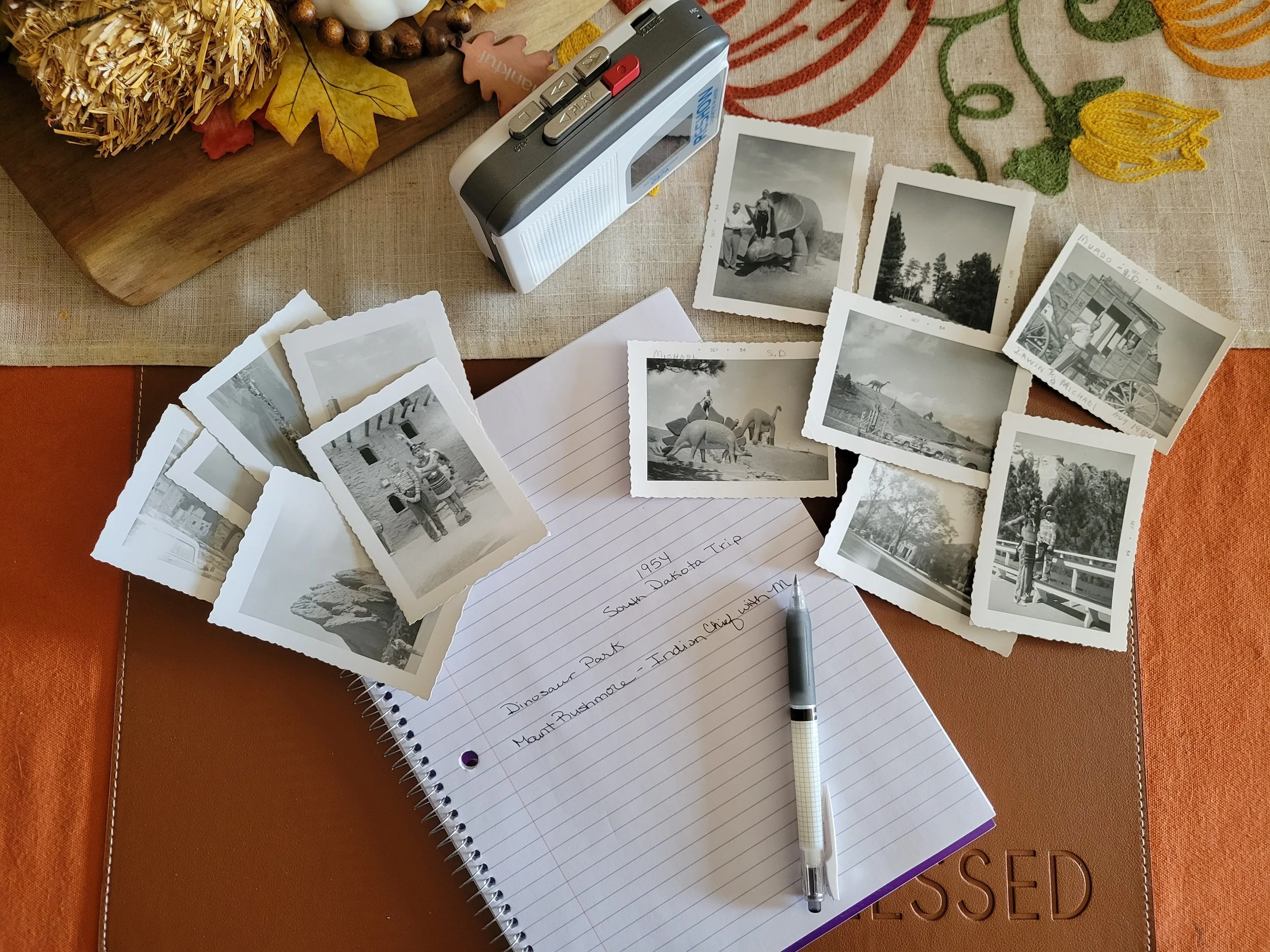
Once you've gathered some of these memories, it's important to record what you've learned.
You don't need special equipment or a complicated system. Choose whatever method feels easiest for you and the person sharing the stories.
Write down the information. Keep a notebook nearby and record names, dates, places, and stories as you look through the photographs.
Use your phone's voice recorder. With your relative's permission, record the conversation so you can listen again later. This can be especially helpful when someone shares a longer story.
Record a short video. A phone video can preserve both the story and the voice and expressions of the person telling it.
Keep notes with the photographs. If you're organizing printed photographs, place written information on separate paper or archival-safe materials kept with the pictures. Avoid writing directly on the front or back of original photographs with ordinary pens or markers.
Add information to digital photographs. If you've scanned the photographs, keep the stories in descriptive file information, captions, or a separate document that clearly identifies each image.
Try to include who shared the information and when you recorded it. If someone isn't completely sure about a name or date, make a note that the information is approximate rather than treating it as a confirmed fact.
The goal is to make sure the next person who looks at the photograph won't have to start asking the same questions all over again.
You Don't Have to Ask Everything at Once
Looking through old photographs doesn't need to become a big project.
You might spend an afternoon going through an entire album, or you might ask about just two or three pictures while visiting a relative.
Both are worthwhile.
And remember, not every photograph will have a long story behind it. Sometimes all you'll learn is a person's name, the location, or an approximate year. That's still information worth saving.
If you have older family members who enjoy sharing memories, consider making these conversations part of your visits. Bring along a few photographs, ask a question or two, and see where the memories lead.
You may learn things about your family that you never knew before.
A Few Questions Today Can Preserve Memories for Tomorrow
Family photographs are wonderful reminders of the people and moments that came before us. But the stories that give those photographs meaning aren't always written down.
They often live in the memories of the people who were there.
The next time you visit a parent, grandparent, aunt, uncle, or another family member, consider bringing along a few old photographs.
Ask who the people are. Ask where they were. Ask what they remember.
You don't have to collect every answer in one sitting.
Even a few questions today can help preserve family stories that might otherwise be forgotten.
Take These Questions With You
Want to have these questions handy the next time you visit family?
I've created a free, two-page printable guide, 10 Questions to Ask Before Old Family Photo Stories Are Forgotten, that you can print and take along when looking through old photographs with loved ones.
Visit the Mohr to Life Resources page to download your free copy.
