
When Every Photo Feels Important: How to Decide What to Keep
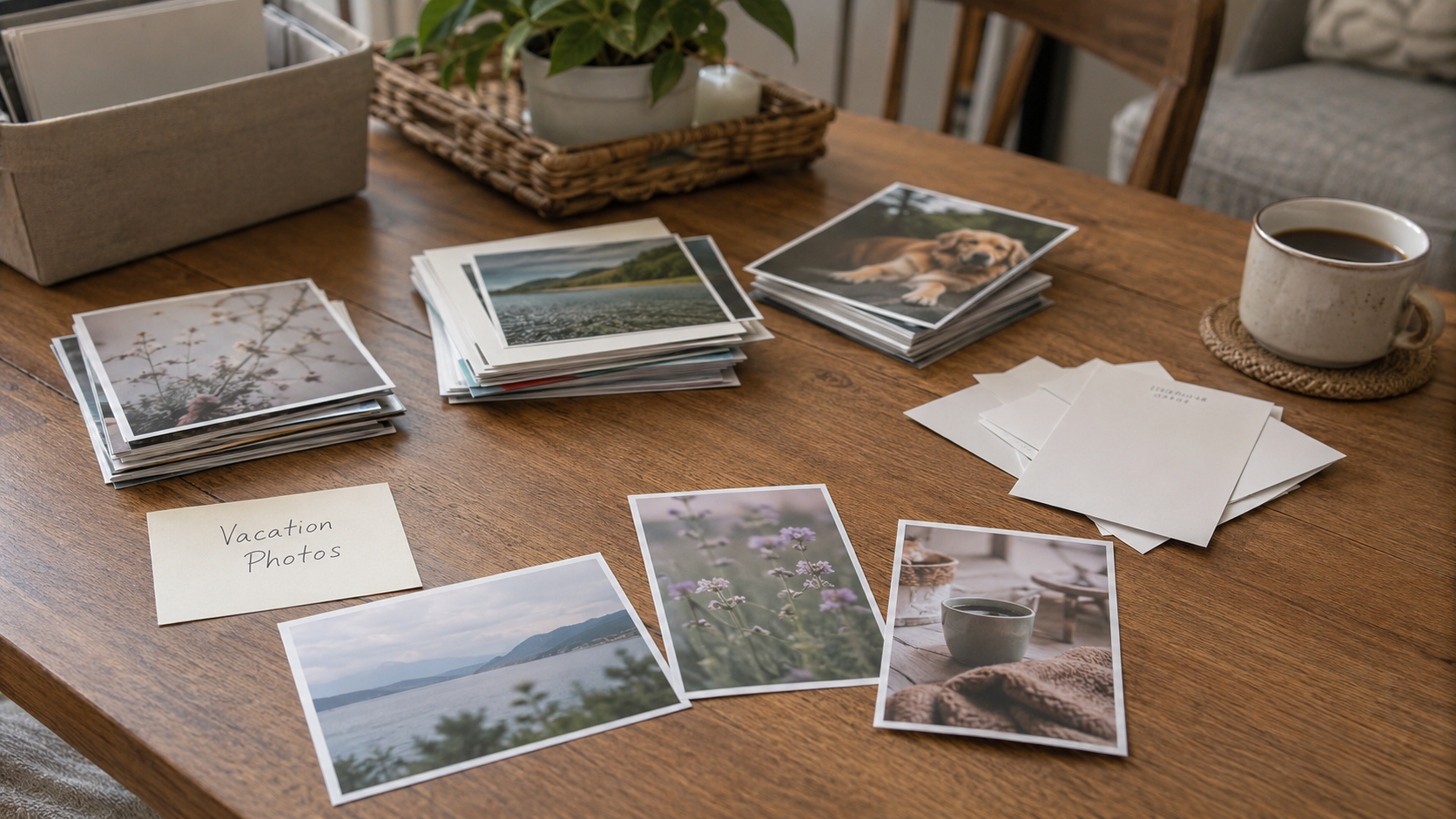
In the first few photo organizing posts, we talked about starting small.
Not with every photo you own. Not with every box, album, phone, folder, and old envelope of prints all at once.
Just one small stack. One album. One box. One group of photos. Something that feels possible to look through without feeling like you have to solve the whole collection in one day.
We also talked about doing a quick first pass through that smaller group. That is where you pull out the obvious clutter — the blurry photos, duplicates, accidental pictures, screenshots you do not need, extra scenery shots, and photos that clearly do not hold meaning for you anymore.
That first pass matters because it lightens the load.
Then, once some of the clutter is gone, you can start grouping what is left into broad categories, like Christmas, vacations, birthdays, school, family, everyday life, or older family photos. From there, you can break those larger groups into smaller ones when it helps.
Photo organizing often happens in several passes. You may go through the same collection more than once, and each pass can have a different purpose. One pass might be for clearing obvious clutter. Another might be for grouping photos into categories. Another might be for breaking those categories into smaller sections.
This step comes after that.
Now you are looking inside one smaller group of photos and deciding what really belongs there.
You are no longer just tossing the blurry photos or deleting the accidental pictures. You are looking at photos that may be perfectly fine — but you still have to decide:
Is this one worth keeping?
That is where people often get stuck.
Photos are not just paper or digital files. They are tied to people, places, seasons of life, and memories we may not want to lose. And when every photo starts to feel like a memory, it becomes hard to let any of them go.
The goal is not to erase memories.
The goal is to make the meaningful ones easier to find, enjoy, and share.
Keeping everything can make the important photos harder to find
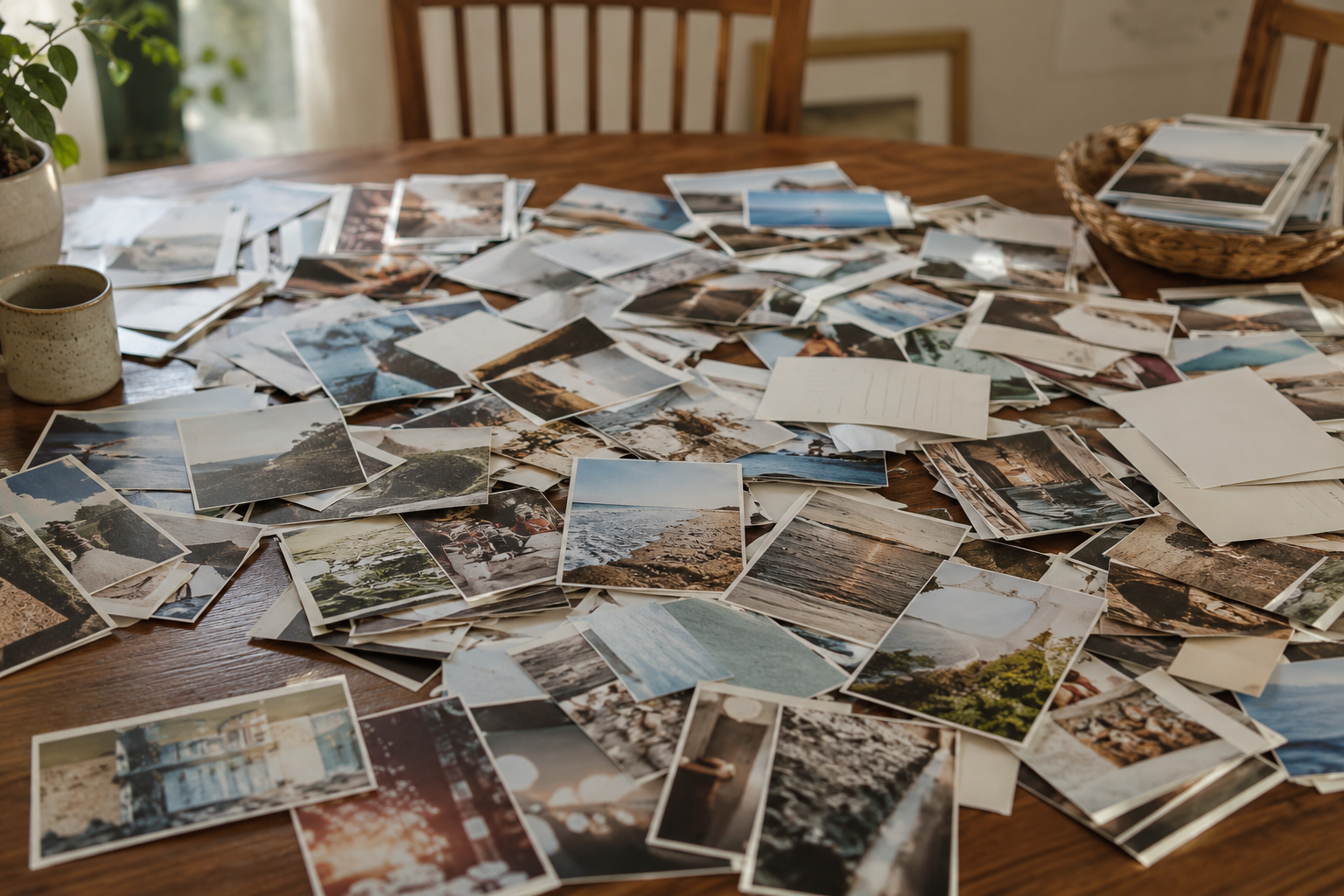
It can feel safer to keep everything.
After all, if you keep every photo, you do not have to worry about making the wrong decision. You do not have to wonder if you will regret deleting something later.
But keeping everything comes with its own kind of problem.
The meaningful photos get buried.
A favorite picture of your child might be hidden between five almost-identical shots. A photo from a meaningful trip might be tucked in with random scenery. A special family gathering might be hard to find because it is surrounded by extra angles, duplicate prints, screenshots, or photos that do not really add anything to the story.
When there are too many photos, it becomes harder to see the ones that matter most.
That does not mean you need to be harsh. It does not mean you need to delete or throw away half of everything. It simply means you can begin choosing with more intention.
Instead of asking, “Can I keep this?” try asking:
Does this photo help tell the story?
That question can make the decision feel a little clearer.
Photos usually worth keeping
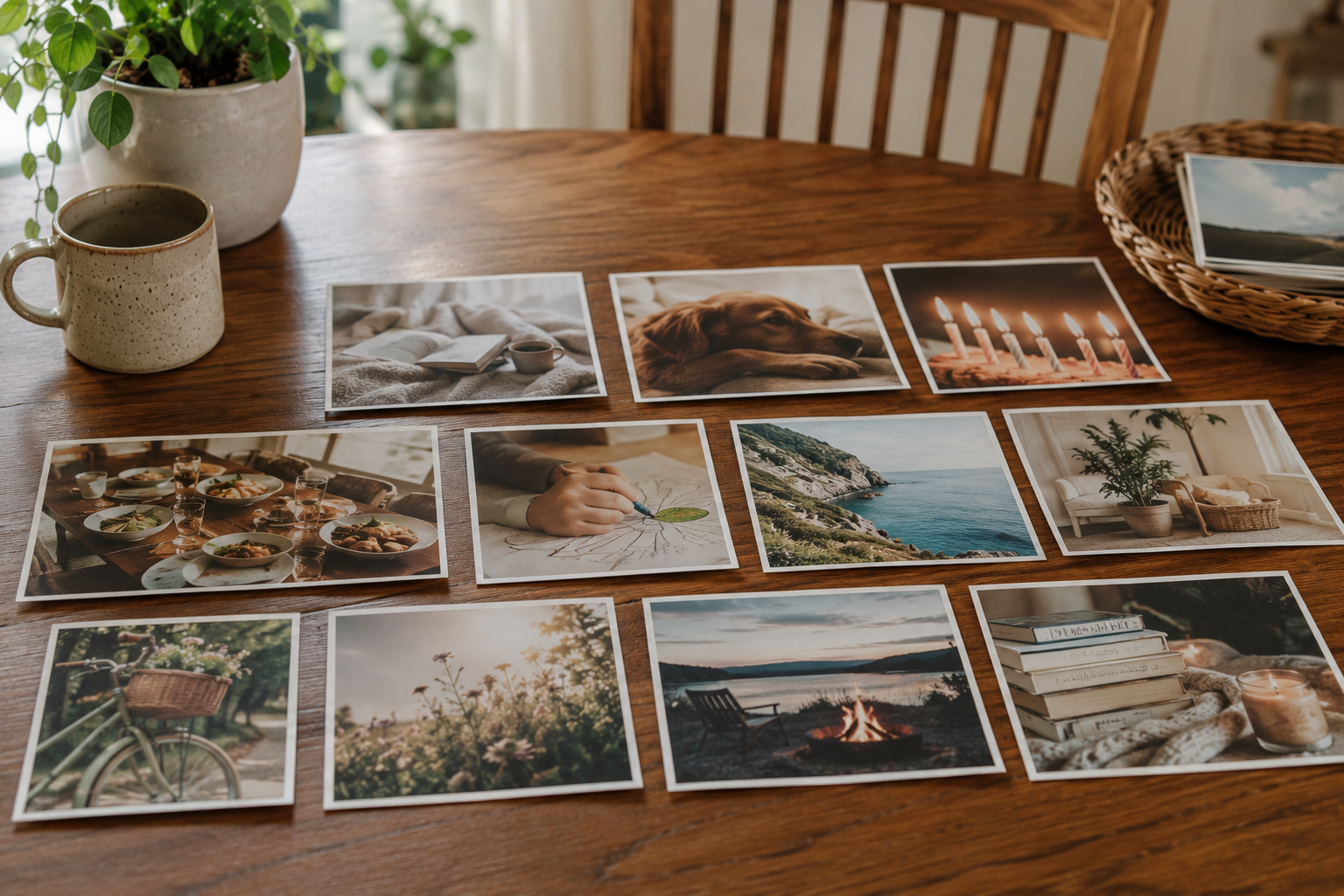
There are no perfect rules for every family, but there are certain kinds of photos that are usually worth keeping.
Photos of people are often the most important. These might be pictures of your children, parents, grandparents, siblings, friends, cousins, neighbors, classmates, or people who were part of a certain season of life.
Relationships matter, too. A photo of siblings together, a grandparent holding a baby, cousins piled onto a couch, or friends gathered in a kitchen can tell a story that a perfectly staged picture might not.
Special places are also worth noticing. This could be a childhood home, a grandparent’s house, a school, a church, a family farm, a favorite vacation spot, or even a room in your house that looked a certain way during a certain time in your life.
Meaningful events are usually keepers as well. Birthdays, holidays, vacations, graduations, weddings, reunions, school activities, sports, performances, and family traditions all help tell the larger story of your family.
But everyday life matters, too.
Sometimes the photos that feel ordinary now become the ones we treasure later. A child reading on the couch. A pet sleeping in a favorite spot. The kitchen during holiday baking. The backyard where the kids played. A favorite toy. The old car in the driveway.
Those little details can help tell the story of what life looked like.
A helpful question to ask is:
Would this photo help me remember or explain this part of our story later?
If the answer is yes, it may be worth keeping.
Photos that are usually okay to let go
Even after you have cleared the obvious clutter, sorted your photos into broad groups, and broken those groups into smaller categories, you may still find photos that do not need to stay.
This is normal.
The first pass is usually about the easy decisions. This pass is more about choosing which photos actually help tell the story.
Sometimes blurry photos slip through. If you have a clearer photo from the same moment, you probably do not need to keep the blurry one.
Duplicates and repeated shots can usually be reduced, too. If you took twenty photos of the same birthday cake, vacation view, child smiling, or family group, you probably do not need all twenty. Keep the one or two that tell the story best.
Screenshots are another category to watch for, especially in digital photo collections. Some screenshots are useful, but many are temporary. Old shopping confirmations, recipes you never made, reminders, memes, or random bits of information may not need to stay with your family photos.
Unrecognizable scenery can also be let go in many cases. If you do not know where it was taken, why you took it, or what it meant, it may not need to stay.
And sometimes, a photo simply does not hold meaning anymore.
That does not make it bad. It just means it may not need to take up space in your collection.
Letting go of these extras can make the photos you love much easier to find.
Set older family photos aside for now
Older family photos can be a little different from the rest of your collection.
If you come across photos from parents, grandparents, previous generations, or people you cannot identify, do not feel like you have to make a final decision about them right now.
For now, set them aside in their own group.
You could label that group:
Older family photos — come back to later
or
Family history photos — need more information
Those photos may need a slower look, and they may be worth talking about with other relatives before you decide what to keep, scan, label, or let go.
We will talk more about older family photos in another post.
For now, just give them a place to wait.
Choose the best version
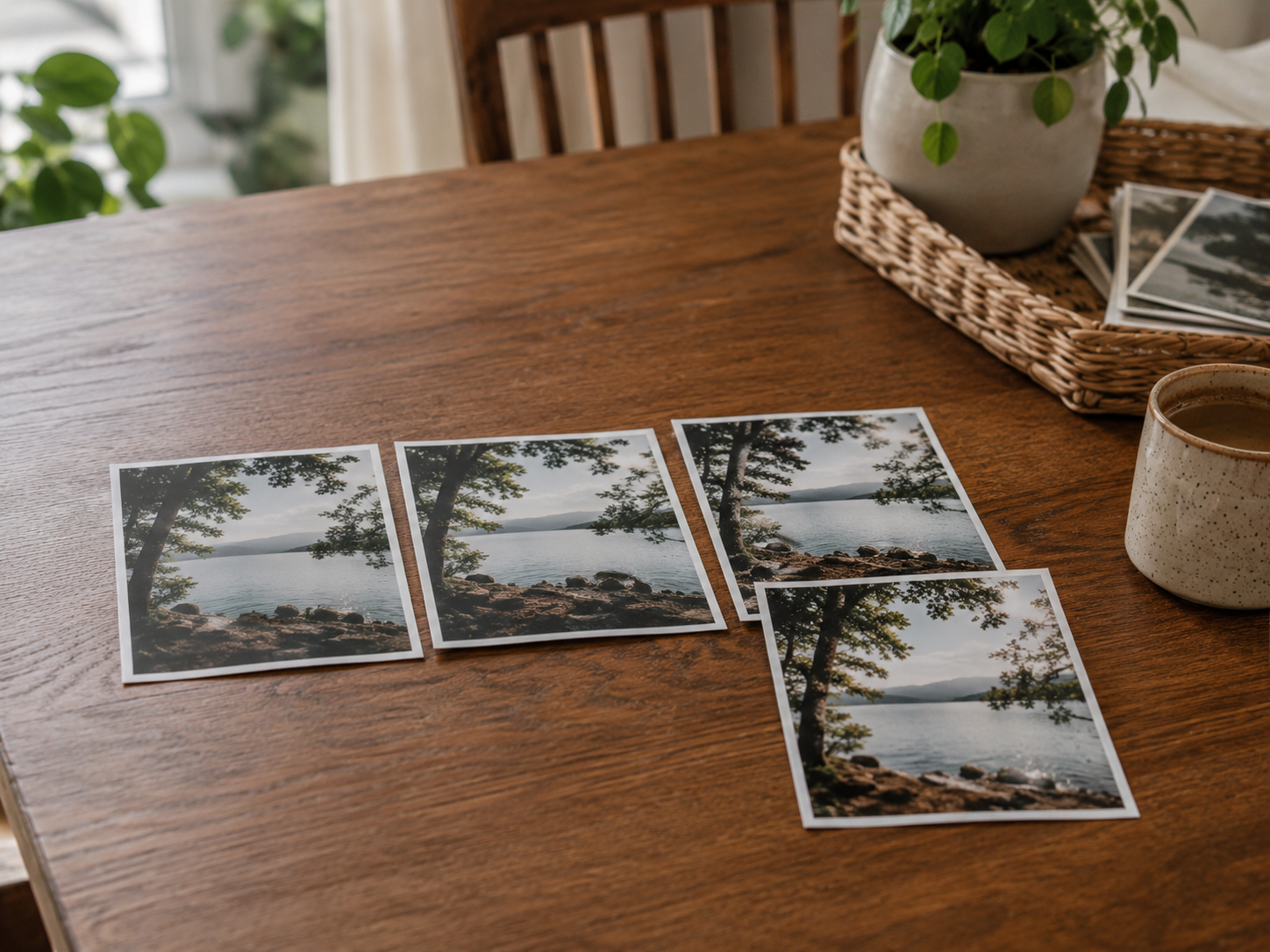
One of the simplest ways to make progress is to choose the best version of a moment.
You do not need every photo from the same angle. You do not need every slightly different smile. You do not need every picture of the same group standing in the same place.
Instead, look for the photo that tells the story best.
That might be the clearest photo. It might be the one where people look most natural. It might be the one with the best expression, the strongest connection, or the most emotion.
Sometimes the technically “best” photo is not the one that matters most.
A slightly imperfect photo may be the one that feels most like the person or the moment.
That is okay.
The goal is not to create a perfect photo collection. The goal is to create a meaningful one.
When choosing between similar photos, ask yourself:
Which one would I actually want to put in a photo book, share with my family, or look back at years from now?
That question can make the decision much easier.
Letting go can be an act of care
It can feel strange to let photos go.
Sometimes it even feels a little guilty.
But letting go of extra photos is not the same as letting go of the memory.
In many ways, it is an act of care.
You are caring for the photos that matter most by making them easier to see. You are caring for your future self by creating a collection that feels less overwhelming. You are caring for your family by making it easier for them to find the people, places, and stories that matter.
A photo collection does not have to include everything to be meaningful.
It just needs to hold the memories that tell your story well.
So as you sort, give yourself permission to make gentle decisions.
Keep the photos that matter.
Let go of the extras when you can.
Pause when something feels uncertain.
Little by little, your photo collection can become less cluttered and more meaningful.
And the memories that matter most will have room to stand out.
If you are working through your own photos, start with just one small group. Choose the ones that help tell the story, let go of the extras that feel easy, and set aside anything you are unsure about. You do not have to finish the whole collection today. One thoughtful pass is still progress.
